Bytecode


Bytecode
۱۵ طرفدار
جدیدترینها

Amfibios

Holographics
Alchemist (Bytecode Remix)

Guillotine (Burr Oak Remix)
Plagues (Kodin Remix)
آخرین انتشارها

Amfibios
آخرین انتشار • تکآهنگ

Holographics
۲۰۲۳ • تکآهنگ

Inception Remixed
۲۰۲۲ • EP
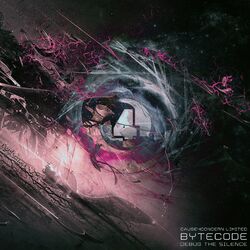
Debug The Silence
۲۰۲۱ • EP


درباره
۱۵ طرفدار
۱۲ انتشار • فعال از ۲۰۱۹
Bytecode (also called portable code or p-code) is an instruction set designed for efficient execution by a software interpreter. Unlike human-readable source code, bytecodes are compact numeric codes, constants, and references (normally numeric addresses) that encode the result of compiler parsing and performing semantic analysis of things like type, scope, and nesting depths of program objects. The name bytecode stems from instruction sets that have one-byte opcodes followed by optional parameters. Intermediate representations such as bytecode may be output by programming language implementations to ease interpretation, or it may be used to reduce hardware and operating system dependence by allowing the same code to run cross-platform, on different devices. Bytecode may often be either directly executed on a virtual machine (a p-code machine, i.e., interpreter), or it may be further compiled into machine code for better performance. Since bytecode instructions are processed by software, they may be arbitrarily complex, but are nonetheless often akin to traditional hardware instructions: virtual stack machines are the most common, but virtual register machines have been built also. Different parts may often be stored in separate files, similar to object modules, but dynamically loaded during execution.
ادامهی بیوگرافی
Bytecode (also called portable code or p-code) is an instruction set designed for efficient execution by a software interpreter. Unlike human-readable source code, bytecodes are compact numeric codes, constants, and references (normally numeric addresses) that encode the result of compiler parsing and performing semantic analysis of things like type, scope, and nesting depths of program objects. The name bytecode stems from instruction sets that have one-byte opcodes followed by optional parameters. Intermediate representations such as bytecode may be output by programming language implementations to ease interpretation, or it may be used to reduce hardware and operating system dependence by allowing the same code to run cross-platform, on different devices. Bytecode may often be either directly executed on a virtual machine (a p-code machine, i.e., interpreter), or it may be further compiled into machine code for better performance. Since bytecode instructions are processed by software, they may be arbitrarily complex, but are nonetheless often akin to traditional hardware instructions: virtual stack machines are the most common, but virtual register machines have been built also. Different parts may often be stored in separate files, similar to object modules, but dynamically loaded during execution.
منبع: ویکیپدیا