LIION


LIION
۷۸۲ طرفدار
جدیدترینها


آخرین انتشارها

Opstijgen
آخرین انتشار • تکآهنگ

Tu Piel
۲۰۲۰ • تکآهنگ
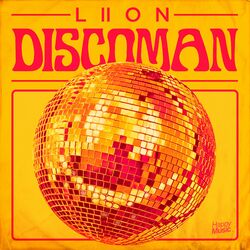
Discoman
۲۰۱۹ • تکآهنگ

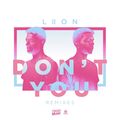
Don't You (Remixes)
۲۰۱۷ • تکآهنگ


طرفداران اینها را هم گوش میدهند





درباره
۷۸۲ طرفدار
۸ انتشار • فعال از ۲۰۱۶
A lithium-ion battery or Li-ion battery is a type of rechargeable battery that uses the reversible intercalation of lithium ions (Li+) into electronically conducting solids to store energy. There are many different varieties, which are usually categorized by the materials used in the cathode. Compared to other rechargeable battery types, they generally have higher specific energy, energy density, and energy efficiency and a longer cycle life and calendar life. In the three decades since Li-ion batteries were first sold in 1991, their volumetric energy density increased threefold while their cost dropped tenfold. In late 2024, global demand passed 1 terawatt-hour per year, while production capacity was more than twice that. The invention and commercialization of Li-ion batteries has had a large impact on technology, as recognized by the 2019 Nobel Prize in Chemistry, which was awarded to contributors to the development of Li-ion batteries. Li-ion batteries have enabled portable consumer electronics, laptop computers, cellular phones, and electric cars. They are used for grid-scale energy storage and in military and aerospace applications. Li-ion battery sizes are generally not standardised (e.g. in the spirit of the AA battery) and they come in various and unique form factors depending on device and vendor. They typically have a nominal voltage of 3.6 or 3.7 V. M. Stanley Whittingham conceived intercalation electrodes in the 1970s and created the first rechargeable lithium-ion battery, based on a titanium disulfide cathode and a lithium-aluminium anode, although it suffered from safety problems and was never commercialized. John Goodenough expanded on this work in 1980 by using lithium cobalt oxide as a cathode. The first prototype of the modern Li-ion battery, which uses a carbonaceous anode rather than lithium metal, was developed by Akira Yoshino in 1985 and commercialized by a Sony and Asahi Kasei team led by Yoshio Nishi in 1991.
ادامهی بیوگرافی
A lithium-ion battery or Li-ion battery is a type of rechargeable battery that uses the reversible intercalation of lithium ions (Li+) into electronically conducting solids to store energy. There are many different varieties, which are usually categorized by the materials used in the cathode. Compared to other rechargeable battery types, they generally have higher specific energy, energy density, and energy efficiency and a longer cycle life and calendar life. In the three decades since Li-ion batteries were first sold in 1991, their volumetric energy density increased threefold while their cost dropped tenfold. In late 2024, global demand passed 1 terawatt-hour per year, while production capacity was more than twice that. The invention and commercialization of Li-ion batteries has had a large impact on technology, as recognized by the 2019 Nobel Prize in Chemistry, which was awarded to contributors to the development of Li-ion batteries. Li-ion batteries have enabled portable consumer electronics, laptop computers, cellular phones, and electric cars. They are used for grid-scale energy storage and in military and aerospace applications. Li-ion battery sizes are generally not standardised (e.g. in the spirit of the AA battery) and they come in various and unique form factors depending on device and vendor. They typically have a nominal voltage of 3.6 or 3.7 V. M. Stanley Whittingham conceived intercalation electrodes in the 1970s and created the first rechargeable lithium-ion battery, based on a titanium disulfide cathode and a lithium-aluminium anode, although it suffered from safety problems and was never commercialized. John Goodenough expanded on this work in 1980 by using lithium cobalt oxide as a cathode. The first prototype of the modern Li-ion battery, which uses a carbonaceous anode rather than lithium metal, was developed by Akira Yoshino in 1985 and commercialized by a Sony and Asahi Kasei team led by Yoshio Nishi in 1991.
منبع: ویکیپدیا