Radioactivity

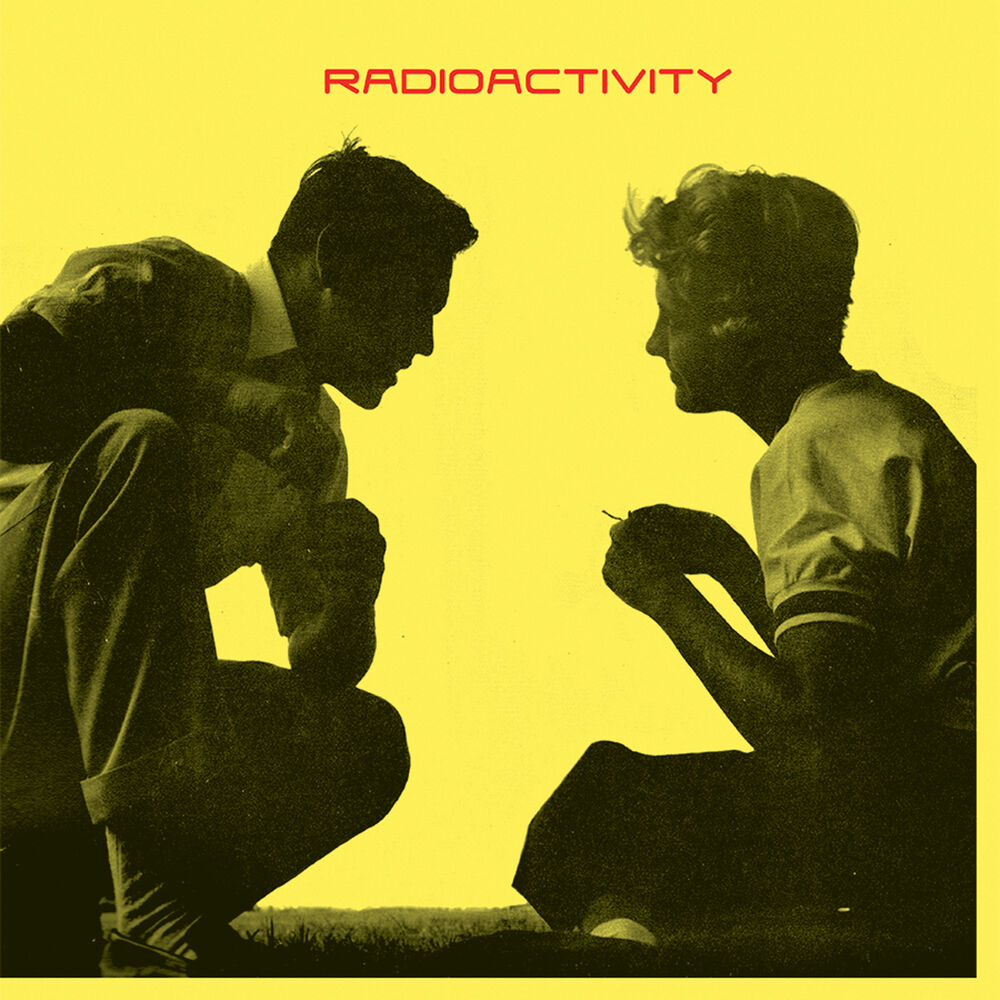
Radioactivity
۱ هزار طرفدار
جدیدترینها

Time Won't Bring Me Down
Watch Me Bleed

Analog Ways
Why
This One Time
آخرین انتشارها

Time Won't Bring Me Down
آخرین انتشار • آلبوم

Analog Ways
۲۰۲۵ • تکآهنگ

Why
۲۰۲۵ • تکآهنگ

Time Won't Bring Me Down
۲۰۲۵ • تکآهنگ


طرفداران اینها را هم گوش میدهند


درباره
۱٬۰۰۲ طرفدار
۱۳ انتشار • فعال از ۲۰۱۳
Radioactive decay (also known as nuclear decay, radioactivity, radioactive disintegration, or nuclear disintegration) is the process by which an unstable atomic nucleus loses energy by radiation. A material containing unstable nuclei is considered radioactive. Three of the most common types of decay are alpha, beta, and gamma decay. The weak force is the mechanism that is responsible for beta decay, while the other two are governed by the electromagnetic and nuclear forces. Radioactive decay is a random process at the level of single atoms. According to quantum theory, it is impossible to predict when a particular atom will decay, regardless of how long the atom has existed. However, for a significant number of identical atoms, the overall decay rate can be expressed as a decay constant or as a half-life. The half-lives of radioactive isotopes have a huge range: from nearly instantaneous to far longer than the age of the universe. The decaying nucleus is called the parent radionuclide (or parent radioisotope), and the process produces at least one daughter nuclide. Except for gamma decay or internal conversion from a nuclear excited state, the decay is a nuclear transmutation resulting in a daughter containing a different number of protons or neutrons (or both). When the number of protons changes, an atom of a different chemical element is created. There are 28 naturally occurring chemical elements on Earth that are radioactive, consisting of 35 radionuclides (seven elements have two different radionuclides each) that date before the time of formation of the Solar System. These 35 are known as primordial radionuclides. Well-known examples are uranium and thorium, but also included are naturally occurring long-lived radioisotopes, such as potassium-40. Each of the heavy primordial radionuclides participates in one of the four decay chains.
ادامهی بیوگرافی
Radioactive decay (also known as nuclear decay, radioactivity, radioactive disintegration, or nuclear disintegration) is the process by which an unstable atomic nucleus loses energy by radiation. A material containing unstable nuclei is considered radioactive. Three of the most common types of decay are alpha, beta, and gamma decay. The weak force is the mechanism that is responsible for beta decay, while the other two are governed by the electromagnetic and nuclear forces. Radioactive decay is a random process at the level of single atoms. According to quantum theory, it is impossible to predict when a particular atom will decay, regardless of how long the atom has existed. However, for a significant number of identical atoms, the overall decay rate can be expressed as a decay constant or as a half-life. The half-lives of radioactive isotopes have a huge range: from nearly instantaneous to far longer than the age of the universe. The decaying nucleus is called the parent radionuclide (or parent radioisotope), and the process produces at least one daughter nuclide. Except for gamma decay or internal conversion from a nuclear excited state, the decay is a nuclear transmutation resulting in a daughter containing a different number of protons or neutrons (or both). When the number of protons changes, an atom of a different chemical element is created. There are 28 naturally occurring chemical elements on Earth that are radioactive, consisting of 35 radionuclides (seven elements have two different radionuclides each) that date before the time of formation of the Solar System. These 35 are known as primordial radionuclides. Well-known examples are uranium and thorium, but also included are naturally occurring long-lived radioisotopes, such as potassium-40. Each of the heavy primordial radionuclides participates in one of the four decay chains.
منبع: ویکیپدیا